FAQs
- Speed humps
- Speed cushions
- Raised crosswalks
- Raised intersections
- Reduced curb radii
- Chicanes
- Curb extensions
- Raised median islands
- Centreline signage / bollards
- Flexible bollards
- On-road pavement markings and symbols
- Signage and informational devices such as Speed Radar Boards
What are the different types of roads in the City of Pickering?
According to the Transportation Association of Canada (TAC) Manual of Geometric Design Standards for Canadian Roads, 2017, road classification is “the orderly grouping of roads into systems according to the type of service they provide to the public. Classification assists in establishing the geometric design features for each group of roads, consistent with the short and long term operational needs of that particular group.”
The three types of roads that are under the City’s jurisdiction are as follows, in ascending order :
Local Roads: primary function is to provide direct access to residential properties with low speed limits and low traffic volumes. They are not intended for use as through routes to move traffic within the overall transportation network.
Collector Roads: access to adjacent properties is balanced by the need to collect and distribute traffic travelling into and out of an area or neighborhood and channel it toward arterial roads, allowing moderate vehicle capacities and transit routing.
Type ‘C’ Arterial Road: Major routes designed to carry higher volumes of regional traffic with controlled property access and integrated transit networks.
Type ‘A’ and Type ‘B’ Arterial Roads are under the jurisdiction of the Regional Municipality of Durham.
What is traffic calming?
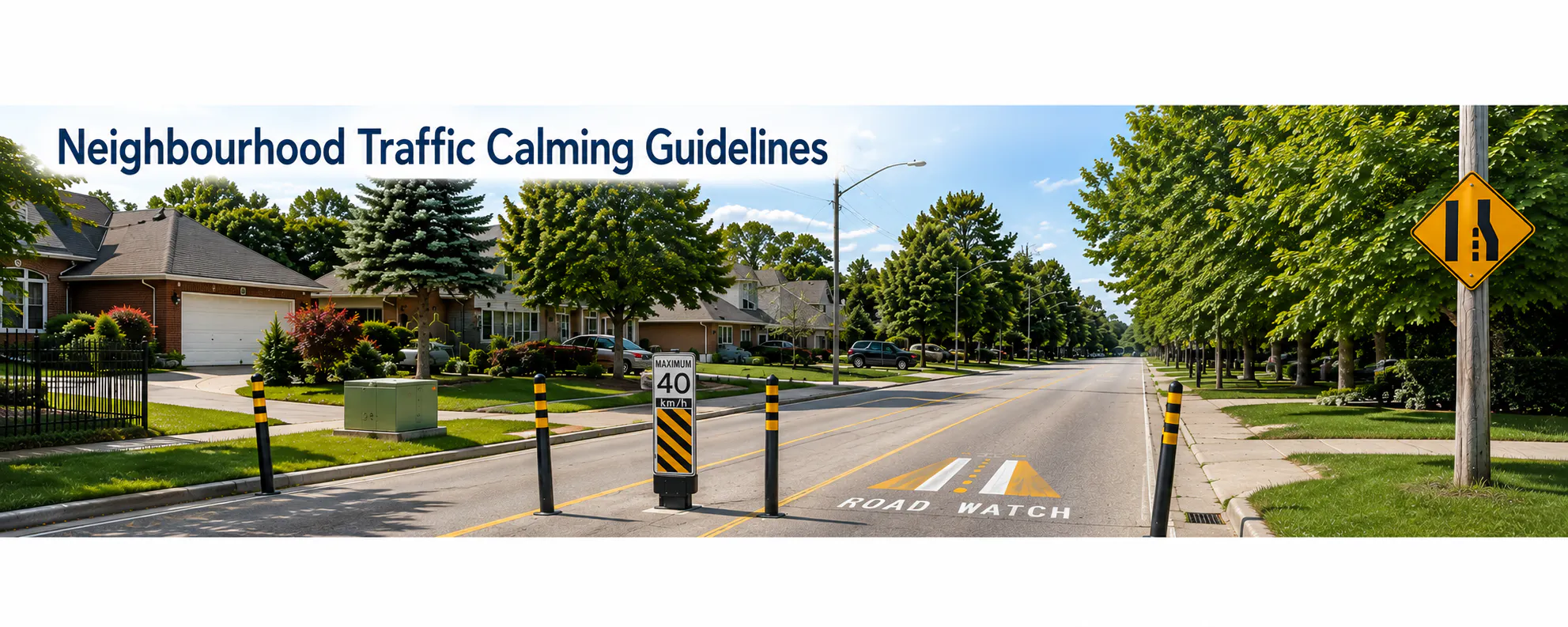
Traffic calming is a set of road design and traffic management measures used to slow vehicles down to make roads safer for people walking, cycling and driving.
What are common traffic calming measures?
Traffic calming measures generally fall into four categories. In Pickering, physical or passive traffic calming measures may be implemented on local and collector roads. Only passive traffic calming measures are considered for minor arterial roads
1. Vertical Deflections (Physical measure)
Measures that raise the roadway surface
2. Horizontal Deflections (Physical measure)
Measures that shift or curve the driving path
3. Road Narrowing (Physical measure)
Physical features that visually or physically narrow the roadway
4. Surface Treatments / Signage (Passive measures)
Pavement markings and visual treatments designed to draw driver attention
How are the Traffic Calming Guidelines different from the 40 km/h speed limit?
Reduced speed limits and traffic calming measures are two complementary approaches for managing vehicle speeds. A reduced speed limit establishes a legal maximum driving speed, but signage alone may not always result in consistent driver compliance. Drivers often adjust their speed based on the physical characteristics and overall appearance of a road.
Traffic calming measures take a different approach by using physical or visual roadway design features to encourage slower driving behaviour. These measures can help create a more self enforcing environment that can improve speed compliance. Together reduced speed limits and traffic calming measures provide a more comprehensive approach to managing vehicle speeds.
Why does the City need Neighbourhood Traffic Calming Guidelines?
Every year the City receives many requests to install traffic calming on various types of streets. The new policy and guidelines establish a standardized procedure for responding to resident traffic concerns while also identifying opportunities to address safety issues proactively, particularly in new development areas.