West Garden Public Art Vote
Consultation has concluded
Dorsay Community & Heritage Centre: West Garden Project
In March 2026, the City of Pickering issued an Expression of Interest, Call to Artists, for an artist/artist team to create permanent outdoor public artwork for the west garden of the Dorsay Community & Heritage Centre.
This outdoor space, which is visible from the parking lot and used daily by residents and visitors, is a highly active zone with strong potential for creative transformation.
We have asked the artists to create concepts that:
• Create a shaded space for public use
• Enhance the garden as a welcoming and meaningful public place
• Encourage interaction, participation, or exploration by the public
• May incorporate multi-sensory or experiential elements such as lighting, audio, tactility, or movement
• Goes beyond traditional sculptural approaches to include site-responsive installations, experiential pathways, interactive environments, or creative placebased interventions
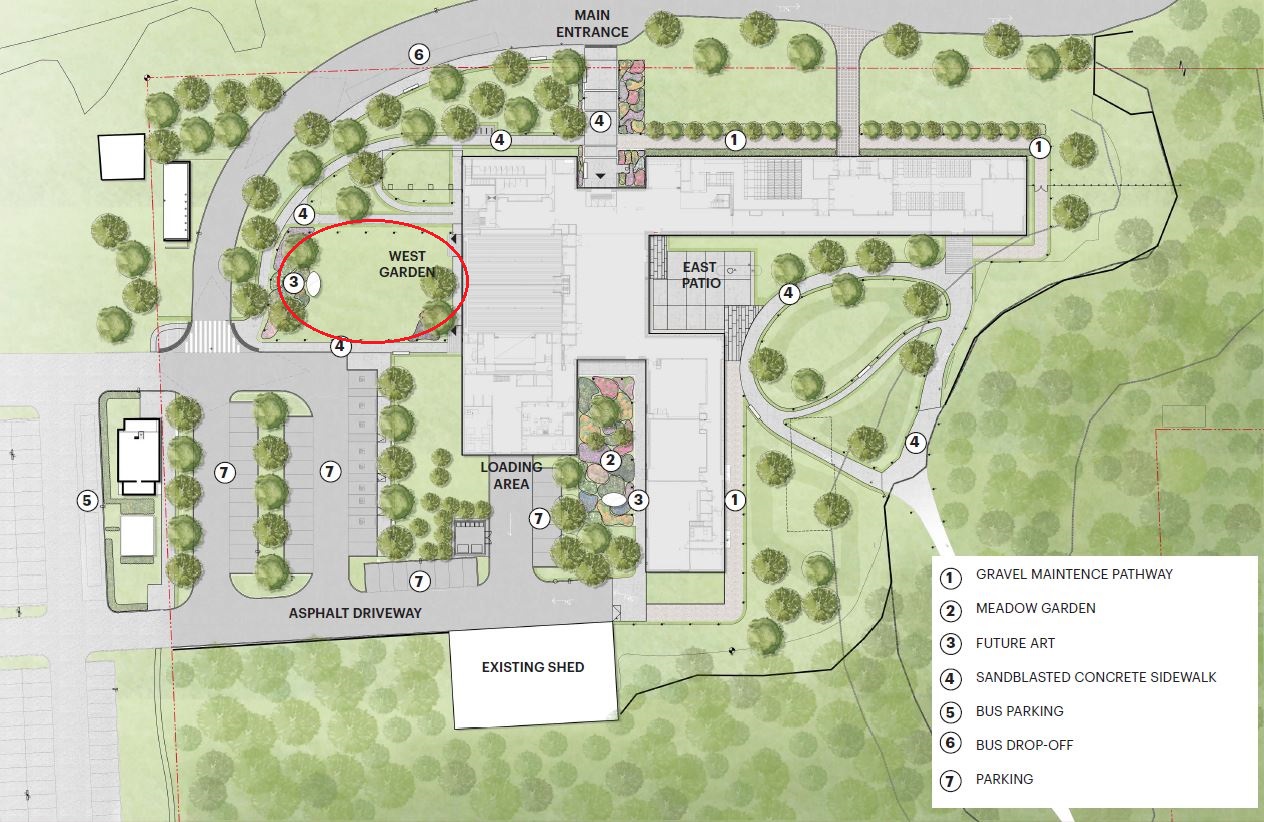
Site plan for Dorsay Community & Heritage Centre with the West Garden showing at the left side.
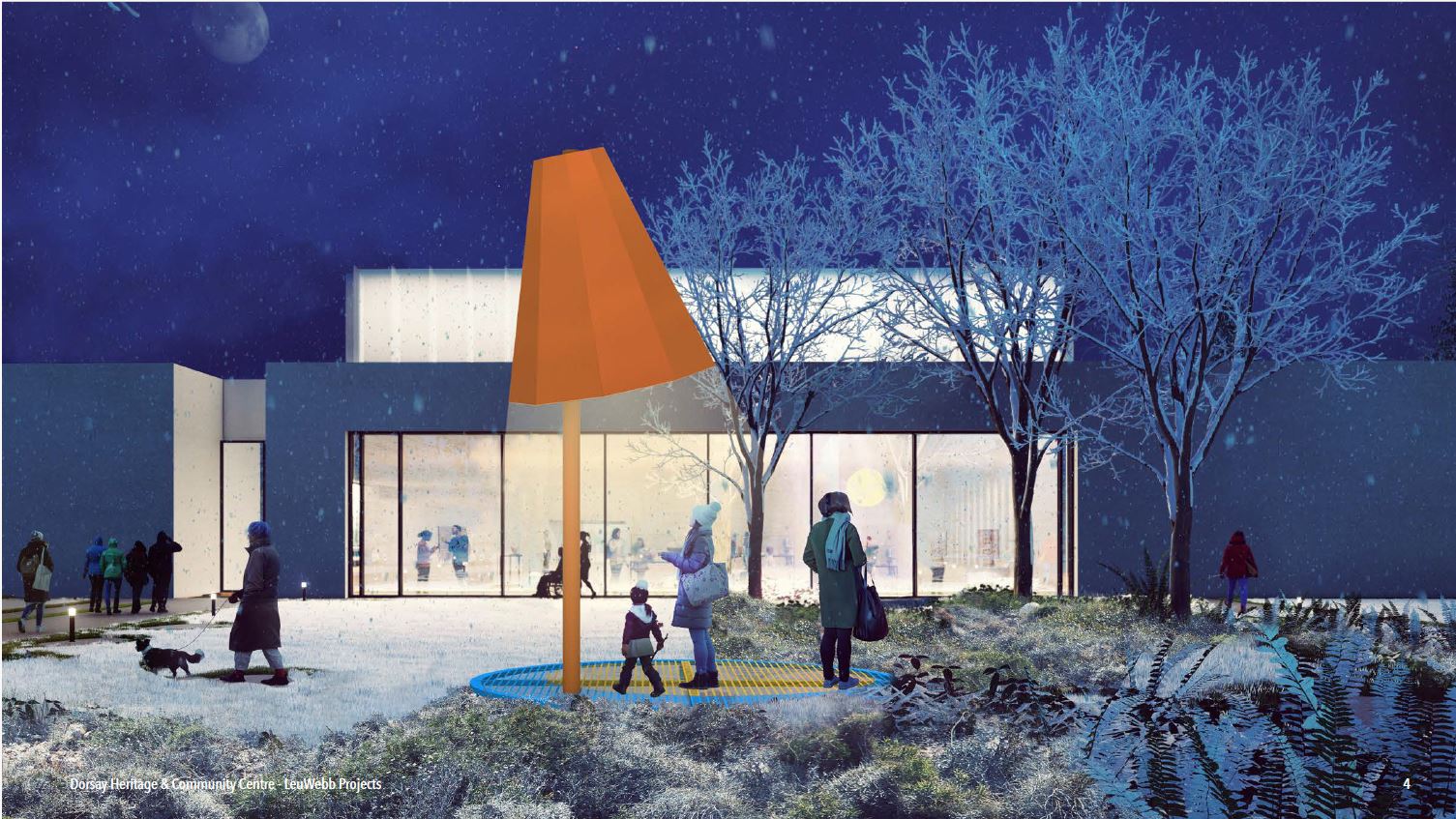
Concept 1: Presented by Leu Webb Projects
Beside the entry drive and adjacent the visitor parking lot is the West Garden. Welcoming visitors along the pathways is an oversized illuminated lamp and brightly coloured metal panels on the ground. The community can seek refuge and gather beneath the warm glow of oversized lamp within the beauty of the outdoors. Preprogrammed with gently changing colours, the lamp shines down onto a brightly coloured metal panel that will make sounds with people walking or jumping its surface Visible from the interior event space, the lamp will cycle through a range of colours to create a dance of light in the evening hours.
- A place of gathering
- A place of play
- A place to celebrate being part of a dynamic community
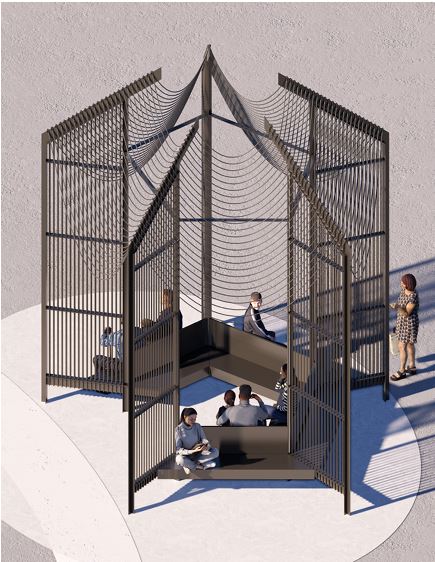
Concept 2: Presented by Polymetis Art & Architecture
The proposed artwork is a freestanding sculptural shade structure for the West Garden at the Dorsay Community & Heritage Centre — a place to gather, pause, and move through slowly. Conceived as both shelter and spatial experience, the work responds to the civic and social character of the site while creating a quieter, more intimate condition within it. Visible from the parking lot and surrounding paths, the structure acts as a landmark within the landscape, but its experience unfolds gradually through movement, light, and occupation.
The work is formed through a radial arrangement of suspended cables draped in soft catenary curves between a lightweight metal structure. These parallel cables are central to the project both visually and conceptually. Read together, they suggest lineages, timelines, and personal narratives held in relation — individual strands gathered into a collective field. As one moves around the sculpture, the cables shift continuously through overlap and perspective, producing changing moiré-like patterns and moments of visual density and openness. The sculpture is intended to be experienced in the round: approached from a distance, encountered in motion, and inhabited from within.
At its centre is a double-sided banquette-like bench positioned beneath an open oculus. The seating invites different forms of use: a place to sit alone, wait briefly, share conversation, or gather informally with others. The circular opening overhead frames the sky and draws light into the centre of the structure, creating a moment of stillness within the larger rhythm of the site. Around it, a circular concrete pad connects to adjacent paving and footpaths, aligning the artwork with the geometry of the building and integrating it naturally into the landscape.
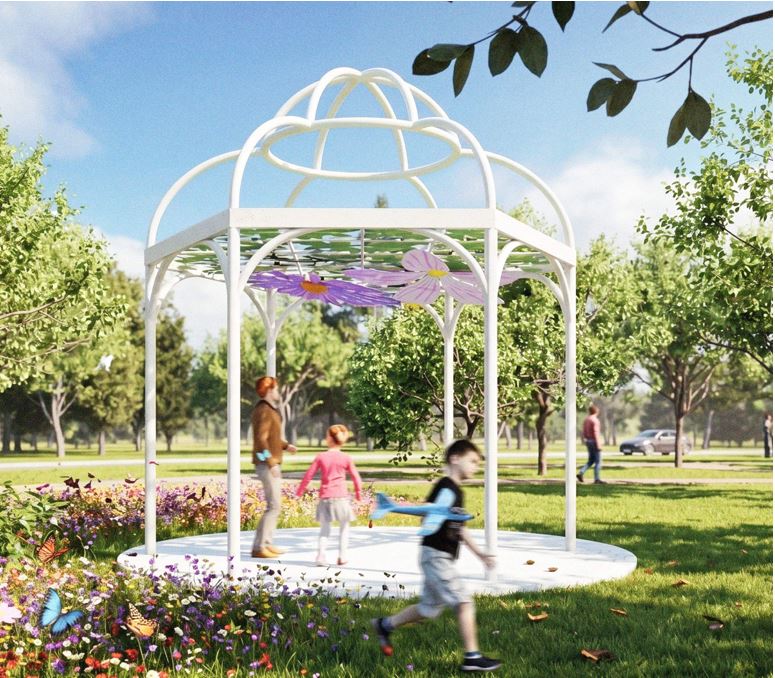
Concept 3: Presented by Studio F Minus
SOWING QUILTS explores how public spaces can carry layers of cultural memory across generations. Drawing from Pickering’s agricultural history, traditions of quilt making, and histories of civic gathering, the work considers how communities are shaped through shared labour, care, and collective experience.
Central to the project is the idea of layering — both physical and historical. Quilts, assembled over time from collected fragments of fabric, often became records of family histories through repair, reuse, and generational exchange. The installation translates this idea into shifting translucent layers that continually transform through movement, light, and parallax, suggesting memory as something active and evolving rather than static.
The pavilion structure references historical gathering spaces that once acted as social anchors within communities. Rather than recreating these forms literally, the work abstracts them into a contemporary environment that encourages visitors to pause, gather, and interact with one another within the landscape.
Native wildflowers act as symbols of both Pickering’s agricultural foundations and its ongoing relationship to environmental stewardship and restoration. Together, these architectural, textile, and botanical references create an installation that reflects resilience, growth, and interconnectedness while transforming the garden into a space of shared encounter and reflection.
-

Phone 9054090567 Email etayles@pickering.ca
